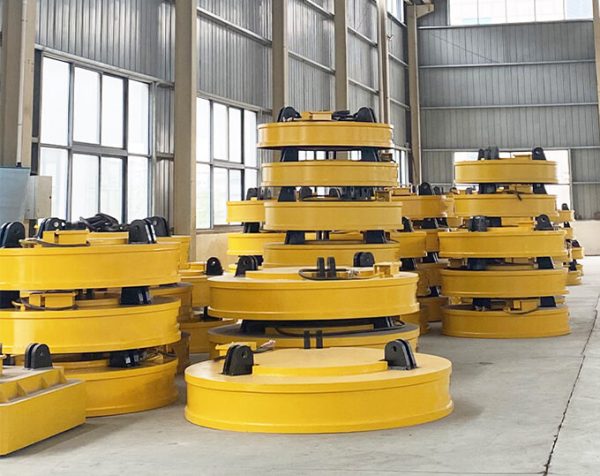
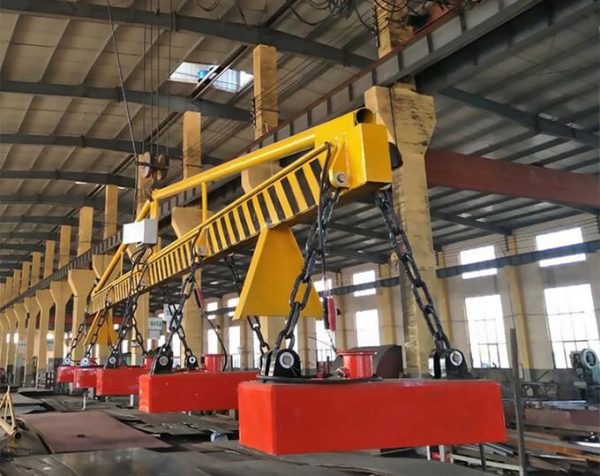
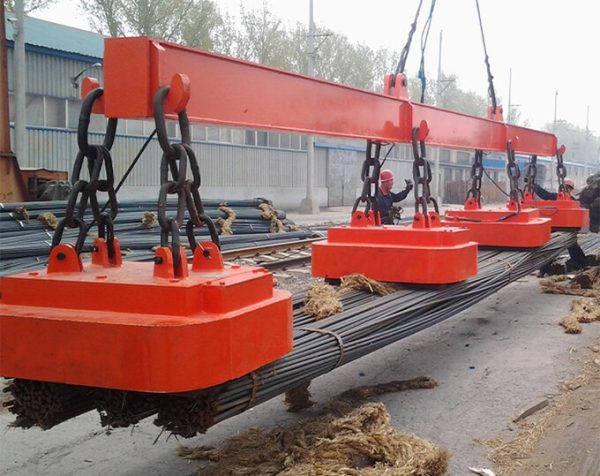
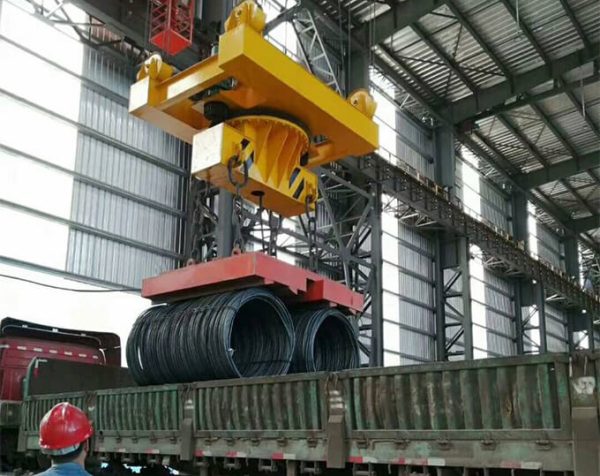
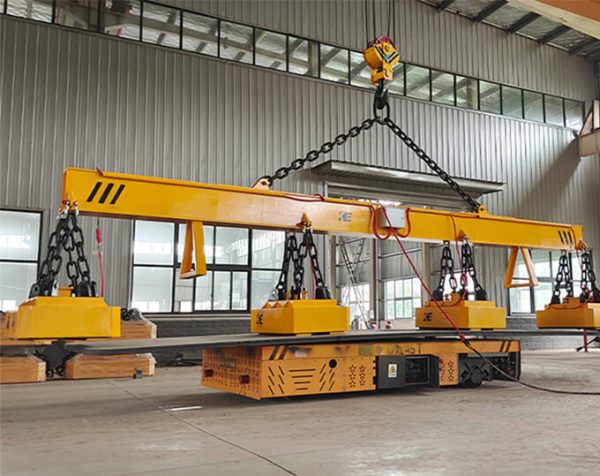
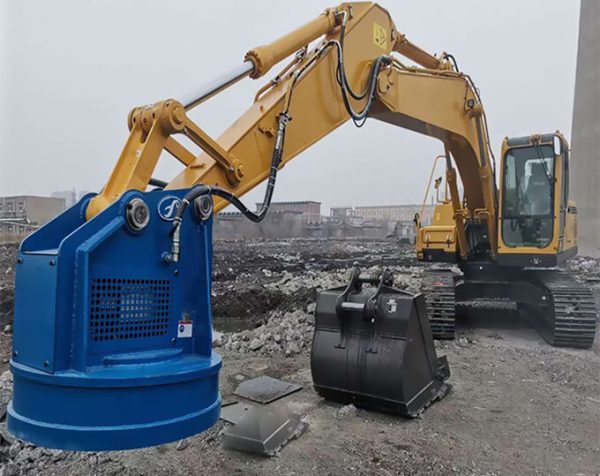
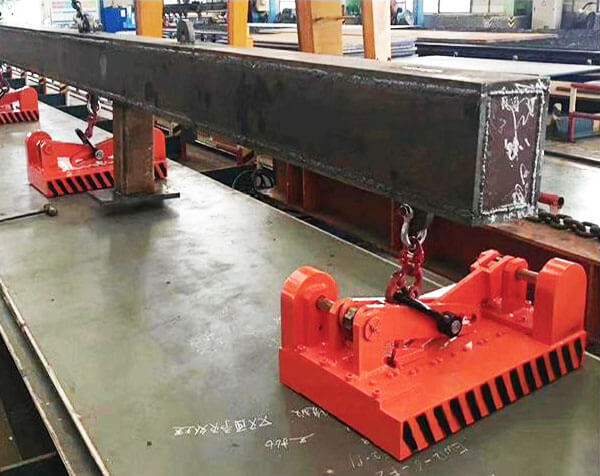
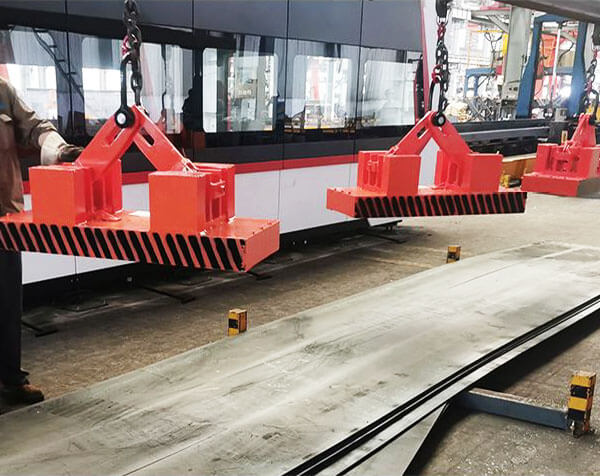
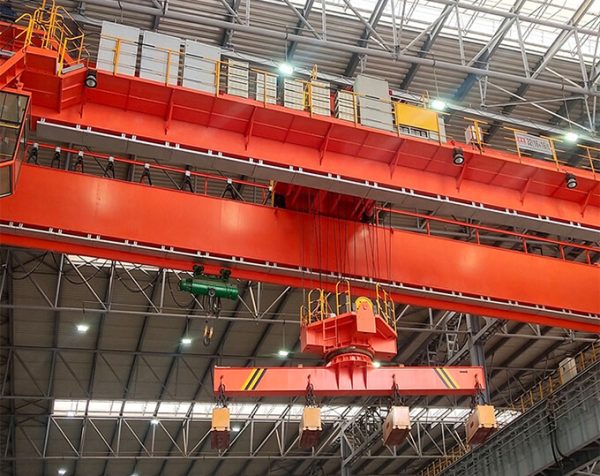
Electromagnetic lifting equipment, as an essential tool for hoisting steel plates and other magnetic materials, is now widely used in industrial settings. Its working principle is based on electromagnets, generating magnetic force through electromagnetic induction to attract and release objects. Therefore, when using electromagnetic lifting equipment to handle steel plates, operators must strictly adhere to operational procedures and pay attention to the following points to ensure smooth hoisting operations and prevent safety accidents.
1. Familiarize Yourself with the Equipment Manual: Before using the electromagnetic lifting equipment, operators should read the operation manual in detail to understand its functions, performance parameters, maintenance procedures, and safety operation guidelines.
2. Inspect Equipment Condition: Before hoisting, conduct a comprehensive inspection of the equipment, including checking that power connections are secure, cables are undamaged, and the equipment surface has no cracks, deformations, etc. Ensure the equipment is in good working condition.
3. Clean the Contact Surfaces: The steel plate and the equipment's magnetic contact surfaces must be thoroughly cleaned, free of moisture, oil, and other foreign matter. This ensures effective magnetic force transmission, prevents a reduction in the equipment's holding power, and avoids potential safety hazards.
4. Verify the Weight: Before hoisting, ensure the weight of the steel plate being handled is within the equipment's safe working load (SWL). Overloading can not only damage the equipment but also lead to accidents during hoisting operations.
5. Confirm Clearance Before Activation: Before activating the electromagnetic equipment to handle the steel plate, ensure no personnel are in the immediate vicinity or passing through the area to prevent injuries in case the plate detaches.
6. Operate Correctly: Handle the equipment gently and steadily, avoiding rapid lifting or lowering to prevent excessive swinging that could cause the steel plate to strike other objects or personnel.
7. Restrict Access Under the Load: During hoisting operations, workers should be prohibited from walking or lingering directly under the load area to prevent injury if the magnetic force fails suddenly or due to operational error, causing the plate to fall.
8. Monitor the Hoisting Status: The entire handling operation must be monitored. Observe the status of the steel plate during movement. If any abnormality is detected, such as the equipment loosening or the plate swinging excessively, stop the operation immediately for inspection and correction.
9. Avoid Moisture and High Temperatures: Since electromagnetic equipment performance can be affected by moisture and high temperatures, confirm that environmental conditions meet requirements before operation. Exercise extra caution, especially when working in areas with water or high temperatures.
10. Use Safety Slings for Large/Heavy Plates: When handling larger or heavier steel plates, use safety slings to secure the plate to the equipment, preventing detachment due to insufficient magnetic force or vibration.
11. Inspect After Placement: Once the steel plate is placed on the ground, inspect the setup. Only deactivate the electromagnetic equipment's magnetic force after confirming no safety hazards exist, to avoid sudden detachment causing the plate to tip or shift.
12. Power Off After Completion: Upon finishing hoisting operations, promptly turn off the power to the electromagnetic equipment and disconnect the power plug to prevent risks from aging electrical wiring or accidental damage.
Strict adherence to the above safety operational points can effectively enhance the safety and work efficiency of electromagnetic lifting equipment when handling steel plates. In practice, each enterprise and operator should also develop corresponding safe operating procedures based on their specific working environment and conditions, continuously optimize workflows and safety measures, reduce the occurrence of safety incidents, and ensure safe and stable production operations.




-600x476.jpg)