Home / News / Technical Analysis: The Correct Choice Between Spreader Beam and Lifting Beam
Technical Analysis: The Correct Choice Between Spreader Beam and Lifting Beam
By weikexiwen ·
11
27
,
2025
Share this:
In the fields of heavy lifting and precision rigging, safety and efficiency begin with the precise understanding and selection of equipment. When faced with massive, irregular, or delicate loads, Spreader Beams and Lifting Beams are critical tools. Although they may look similar and are often generally referred to as "lifting beams," their fundamental mechanical principles and application scenarios are distinctly different. Making the correct choice is the cornerstone of ensuring safety and enhancing efficiency.
I. Core Mechanism: The Fundamental Difference Between Compression and Bending
The essential difference between the two lies in their load-bearing modes, which determines all their characteristics.
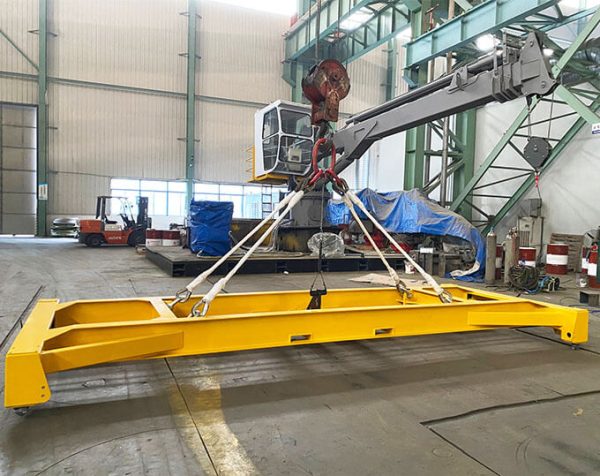
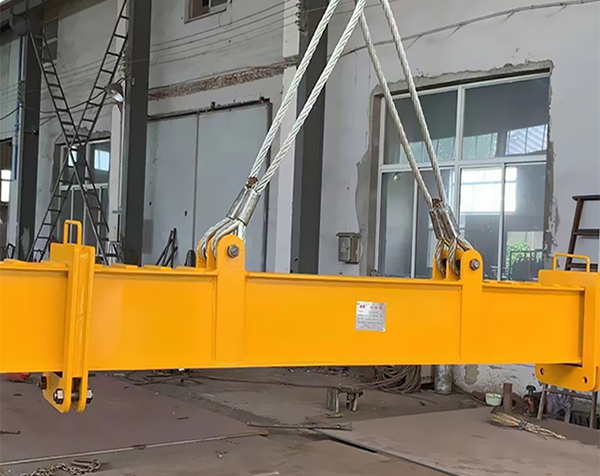
Spreader Beam: The Force Transmitter, Core is "Compression" It connects to the crane hook via a top sling, with the ends of the sling fixed to both ends of the beam, forming a stable triangular structure. In this configuration, the top sling bears the tensile force, while the beam itself is in a state of pure compression. Its core function is to "spread" the slings, providing stable suspension points for the load below. The load is suspended from the ends of the spreader beam via two separate, independent slings.
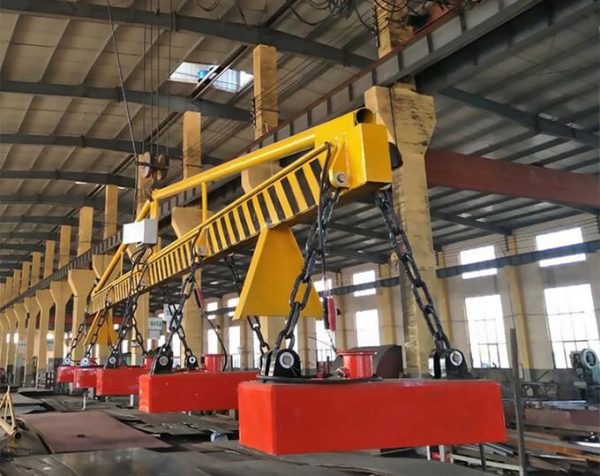
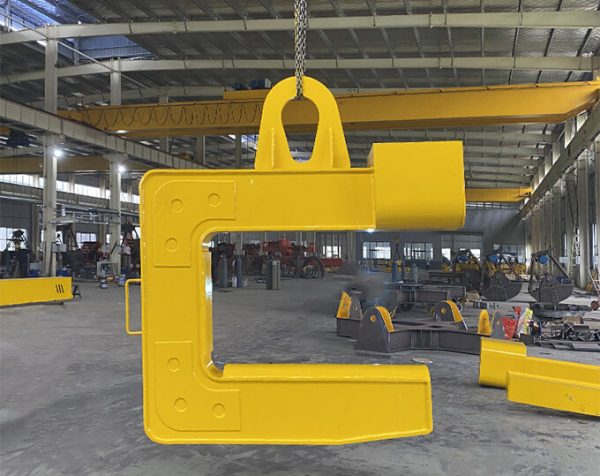
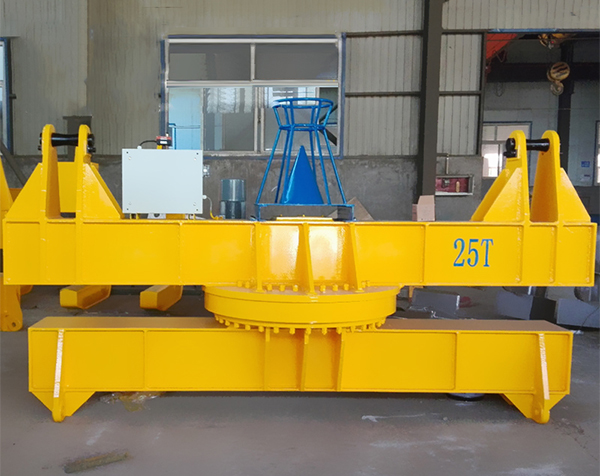
Lifting Beam: The Force Bearer, Core is "Bending" It is typically connected directly to the crane hook via one or multiple lifting points on its top. The beam has a series of attachment points underneath for directly connecting to the load. When the load is hoisted, the force acts on the beam body through these points, creating a bending moment. Therefore, the Lifting Beam must rely on its own structural strength to resist bending.
This fundamental distinction – Compression vs. Bending – is the key to understanding all subsequent application differences.
II. Five Key Factors Determine Your Choice
How does one make the right decision in practical projects? Please evaluate the following five core factors:
Headroom: The Spatial Constraint
Choose Spreader Beam: When vertical space is ample. Its triangular structure is stable but requires more installation height.
Choose Lifting Beam: When workspace is low or headroom is limited. Its compact vertical connection maximizes the use of available height.
Load Control: The Pursuit of Stability
Choose Spreader Beam: Suitable for conventional, stable loads. As the load is connected via flexible slings, it allows for a certain degree of free swinging.
Choose Lifting Beam: When precise control of load attitude is needed (e.g., to prevent tilting, flipping, or rotation). For instance, it offers superior stability when installing precision equipment, large glass panels, or components with an asymmetrical center of gravity.
Lifting Point Configuration: The Load's Requirement
Choose Spreader Beam: Usually provides only two end lifting points, perfectly suited for standard two-point lifts.
Choose Lifting Beam: When the load requires three or more points to distribute stress, or requires asymmetric lifting points, it becomes the necessary choice due to the flexible multiple points available on its bottom.
Equipment Self-Weight: Impact on Lifting Capacity
Choose Spreader Beam: Due to its efficient compressive structure, its design can be very lightweight. For the same lifting capacity, its self-weight is usually lighter, leaving more weight allowance for the payload.
Choose Lifting Beam: To resist bending, its structure must be sturdier, often resulting in a greater self-weight that directly consumes a portion of the crane's rated capacity.
Cost-Effectiveness and Versatility: Considering Long-Term Value
Choose Spreader Beam: Typically has a lower manufacturing cost, and by using different length top and bottom slings, a single unit can be adapted flexibly to various spans and loads, offering high versatility.
Choose Lifting Beam: Often customized for specific tasks, involving a higher initial investment and relatively lower versatility.
Conclusion
The choice between Spreader Beams and Lifting Beams is not about which is superior, but about suitability.
The Spreader Beam is the versatile, economical "all-rounder" in your toolkit, handling most conventional heavy lifting tasks with ease.
The Lifting Beam is the specialized, precise "specialist," indispensable in complex scenarios with space constraints and extremely high stability requirements.
The final decision should be based on a comprehensive analysis of the load, environment, and objectives. For any complex lifting task, consulting a professional lifting engineer is always the safest investment for ensuring safety and success. Please feel free to contact us with any questions regarding lifting beams.









-600x476.jpg)